


Engineering Technical Whitepaper: AMOLED & GPS Wearables Optimized for Vietnam
Vietnam’s outdoor smart wearable market is expanding rapidly, driven by growing consumer participation in trail running, mountain trekking in Northern Vietnam, aquatic sports along coastal areas, and heavy daily urban commuting by motorbike. However, exporting electronic wearables into Vietnam presents severe hardware reliability challenges due to high ambient solar radiation, extreme relative humidity (often exceeding 85%–95% RH year-round), and urban RF signal absorption in high-density metropolitan zones like Ho Chi Minh City and Hanoi.
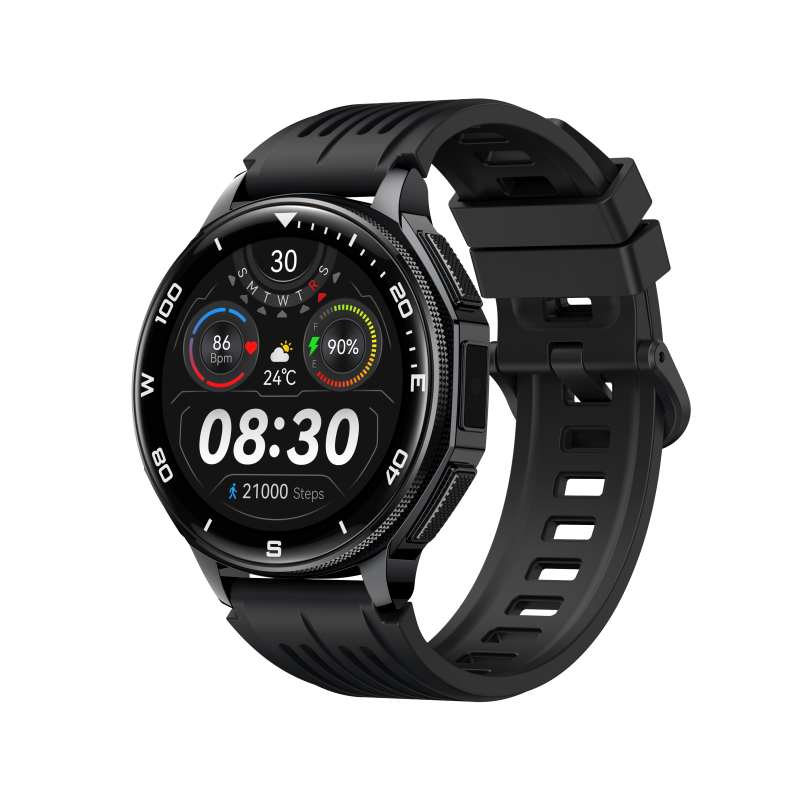
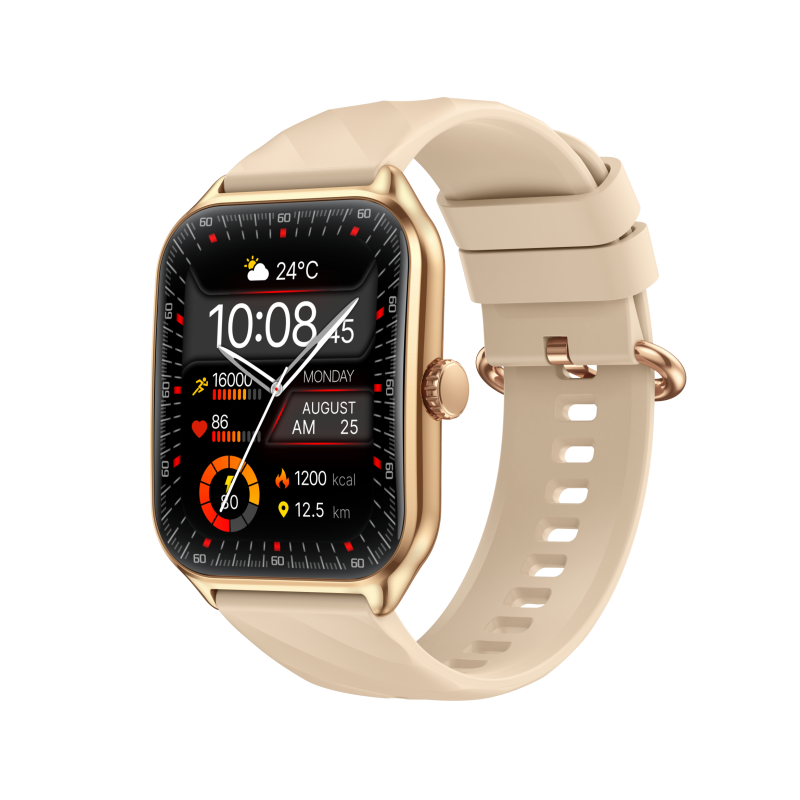
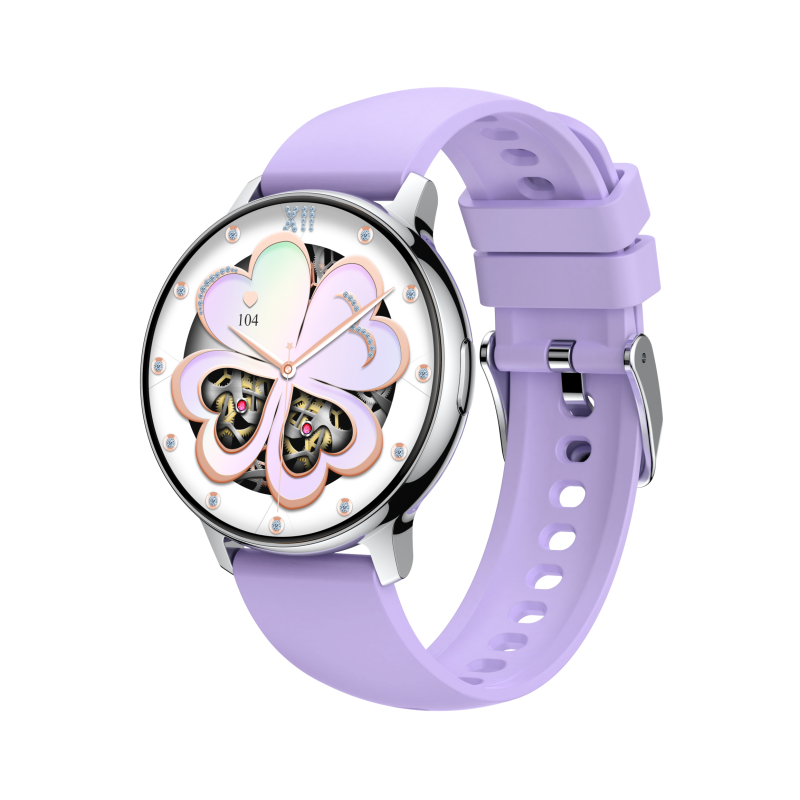
As an established manufacturer specializing in original equipment manufacturing (OEM) and original design manufacturing (ODM), Awia Electronic Commerce Co., Ltd. has re-engineered our line of CE-certified AMOLED GPS smartwatches to address the precise environmental, regulatory, and linguistic requirements of the Vietnamese market.
1. High-Lux Sunlight Visibility & Display Optics
Standard LCD displays suffer severe contrast degradation when exposed to direct equatorial sunlight, reaching illuminance levels upwards of 80,000 to 100,000 lux during peak hours in Southern Vietnam. Our flagship smartwatches utilize active-matrix organic light-emitting diode (AMOLED) panels engineered with sub-pixel luminance drivers capable of achieving 1,000 nits peak brightness.
AMOLED Self-Emitting Contrast
Each pixel generates its own illumination, enabling true deep blacks and dynamic contrast ratios (>100,000:1) so navigation maps and vital metrics remain instantly readable without eye strain.
Anti-Reflective Sapphire Glass
Coated with vacuum-deposited anti-reflective (AR) and oleophobic nanofilms, the lens glass prevents glare and repels sweat, grease, and water droplets during intense physical outdoor exertion.
Energy-Efficient Ambient Sensing
Integrated photo-sensors dynamically adjust display backlight frequencies, preserving battery life while maintaining automatic brightness transitions when moving between shaded forest trails and open sunshine.
2. Dual-Frequency (L1+L5) Multi-Constellation Satellite Positioning
Single-frequency GPS watches frequently suffer multipath signal reflection in dense urban canyons filled with high-rise structures (such as Hanoi's Ba Dinh district or HCMC's District 1) and signal attenuation under dense jungle canopies (such as Sapa or Bach Ma National Park). Our S99 Series architecture integrates a multi-constellation GNSS receiver supporting simultaneous tracking across five satellite networks: GPS, GLONASS, Galileo, BeiDou, and QZSS.
By processing both the legacy L1 frequency (1575.42 MHz) and the advanced L5 frequency (1176.45 MHz), the chipset effectively isolates and cancels ionospheric delays and signal bouncing. This dual-band capability delivers pin-point positional accuracy within 1.5 meters, enabling precise trail logging, real-time turn-by-turn navigation via offline vector maps, and dependable emergency point-of-interest back-tracking.
3. Humidity Immunity & Hydrophobic Sealing Architecture
Moisture ingress and galvanic circuit corrosion are the leading causes of early hardware failure in tropical electronics. Our manufacturing line enforces multi-layered waterproofing protocols compliant with 5ATM (ISO 22810 standard) and IP68 ratings.
- Structural Micro-Gaskets: Custom liquid silicone rubber (LSR) O-rings seal all button shafts, optical sensor housings, and chassis junction points against pressurized moisture penetration up to 50 meters depth.
- Nano-Conformal Circuit Coating: Printed Circuit Board Assemblies (PCBAs) undergo automated hydrophobic plasma spray coating, preventing short circuits even in the event of micro-condensation caused by abrupt temperature drops (e.g., exiting air-conditioned environments into humid outdoor tropical air).
- Corrosion-Resistant Metals: Charging contacts use 24K gold-plated pogo pins combined with surgical-grade 316L stainless steel bezels to resist sweat-induced degradation and salt-fog oxidation.
4. Native Vietnamese Language (UTF-8) Typography Optimization
A common failure of generic wearable exports to Vietnam is corrupted character rendering caused by improper font rendering engines handling complex Vietnamese diacritical marks (accents such as ấ, ầ, ẩ, ẫ, ậ, ắ, ằ, ẳ, ẵ, ặ). Our custom firmware stack incorporates dedicated UTF-8 sub-pixel font anti-aliasing engines, ensuring incoming Zalo, Facebook Messenger, SMS, and system notifications render cleanly without broken symbols or line overflow glitches.