
The Technical Evolution of Custom OEM NFC Rings: Engineering, RF Calibration & Sintering Standards
In the rapidly maturing landscape of smart wearables, the NFC (Near Field Communication) ring represents a masterpiece of miniaturized radio frequency (RF) engineering, material science, and bio-compatible ergonomic design. As a premier custom OEM NFC ring factory and exporter, Awia Electronic Commerce Co., Ltd. has spearheaded the shift from basic passive identification trinkets to military-grade, multi-chip cryptographic hardware rings used in enterprise access control, contactless payments, and WebAuthn authentication.
Designing an industrial-grade NFC ring requires solving one of RF engineering's greatest challenges: packaging a resonant antenna coil inside a highly constrained, metallic, or ceramic circular enclosure without suffocating magnetic flux or causing detuning due to close proximity with human skin capacitance.
Key Information Gain Insight: Standard RFID tags operate in free air with omnidirectional electromagnetic coupling. An NFC ring worn on a human finger operates in a high-dielectric environment. Our engineering facility utilizes 3D micro-coaxial antenna geometries coupled with high-permeability sintered ferrite shielding sheets (mu-metal backing) to eliminate skin Eddy-current absorption, achieving stable 13.56 MHz communication across all reader configurations.
1. Micro-Antenna Geometry & RF Resonance Tuning
At the core of every high-performance custom OEM NFC ring is an ultra-fine copper wire coil or multi-layer flexible printed circuit (FPC) antenna. To meet ISO/IEC 14443 Type A/B and ISO/IEC 15693 standards, the circuit must operate precisely at 13.56 MHz with an optimized Quality Factor (Q-factor). If the Q-factor is too high, bandwidth collapses, causing data dropouts during fast swipes; if it is too low, energy harvesting from the NFC reader fails, leading to zero read range.
- High-Permeability Ferrite Isolation: A sub-0.1mm flexible ferrite layer absorbs reverse magnetic fields, allowing the ring to be safely cased inside aerospace titanium or zirconium oxide ceramic without field attenuation.
- Resonant Circuit Impedance Matching: Custom tuning capacitors are micro-soldered directly onto the substrate to compensate for localized permittivity variations, ensuring a consistent 1.5 cm to 3.5 cm read distance on modern smartphones and door access readers.
- Dual-Chip Coexistence: Advanced OEM configurations embed both a High-Frequency (13.56MHz NTAG216 / MIFARE) and Low-Frequency (125kHz TK4100 / EM4200) chip within a single ring ring cavity, utilizing isolated non-interfering spatial loops.
2. Material Science Matrix: Zirconium Ceramic vs. Titanium vs. Epoxy Resin
Selecting the optimal substrate material dictates not only the aesthetic weight and tactile luxury of the ring but also directly affects signal propagation and IP rating longevity. Below is a comparative technical matrix designed for B2B procurement managers and hardware product leads:
| Material Variant | Vickers Hardness (HV) | RF Transparency | Waterproof Rating | OEM Customization Options | Primary Application |
|---|---|---|---|---|---|
| Nano-Zirconia Ceramic (ZrO2) | 1,200 - 1,500 HV | 99.4% (Zero Loss) | IP68 (50m Waterproof) | PVD Polishing, Laser Inlay, Matte/Gloss | Luxury Consumer & Access Control |
| Aerospace Titanium (Ti-6Al-4V) | 350 - 400 HV | Shielded (Requires Cavity Window) | IP68 / 10ATM | CNC Milling, Anodization, Micro-Lattice | Rugged Enterprise & FIDO2 Security |
| Medical-Grade Epoxy Resin | 80 - 100 HV | 98.8% (High Pass) | IP68 (Hermetically Sealed) | Color Pigments, Carbon Fiber, Shells | Fitness Gyms, Events & Promo OEM |
| Tungsten Carbide Alloy | 1,800 - 2,100 HV | Shielded (Ferrite Layer Mandatory) | IP68 | Beveled Edge, Metallic PVD Colors | Ultra-Durable Industrial Wearables |
OEM/ODM Manufacturing Workflows: How We Scale From Prototype to Mass Production
As a verified OEM supplier based in Shenzhen's tech manufacturing hub, our facility integrates complete end-to-end tooling, component placement, potting, and automated testing lines under one roof. We eliminate supply chain friction by controlling every step of the smart ring production lifecycle:
1. Rapid Mold Tooling & Prototyping
In-house CNC machinery and high-precision 3D wax printers allow us to supply golden physical samples in as little as 3-5 working days. Private mold designs remain protected under strict strict NDA contracts.
2. Automated SMT & Bonding
Microscopic chip die bonding and high-speed surface-mount technology (SMT) place NTAG / NXP dies onto flexible ring circuits with sub-micron accuracy, preventing mechanical fatigue under daily finger flex.
3. Vacuum Resin Potting
100% solid-state vacuum resin encapsulation ensures zero internal air pockets, granting total immunity to water ingress, thermal expansion, and mechanical shock up to 50 meters under sea level.
4. Automated Vector Testing
Every manufactured batch undergoes 100% high-frequency automated testing using Vector Network Analyzers (VNA) to confirm resonance frequency, chip UID readability, and NDEF data integrity.
B2B Procurement Trends & User Intent Analysis in Smart Ring Sourcing
According to recent search intent data and international B2B buyer behavior, sourcing demands for smart rings are shifting dramatically from simple novelty accessories to complex enterprise digital tools. Sourcing directors, brand managers, and tech distributors must prepare for three critical macro-trends currently driving the industry:
Trend 1: Convergence of Physical & Logical Access (WebAuthn / FIDO2)
Enterprise clients are replacing plastic ID badges and vulnerable SMS two-factor authentication with wearable cryptographic security keys. Custom OEM NFC rings embedded with EAL6+ certified Secure Elements (SE) enable employees to tap their ring onto laptops, doors, and point-of-sale terminals to achieve seamless, passwordless zero-trust authentication.
Trend 2: Dual-Chip Architecture & Multi-Standard Interoperability
Global buyers no longer accept single-function smart rings. The highest converting procurement requests specify dual-chip integration: an NTAG216 IC dedicated to user-customizable vCard social sharing or web redirection, paired alongside an encrypted NXP MIFARE IC pre-configured for commercial hotel keycards, smart building turnstiles, and EV charger activation.
Trend 3: Hypoallergenic Materials & Sustainable Packaging
With eco-regulations expanding across Western Europe and North America, buyers require full RoHS 2.0 and REACH chemical safety documentation. Medical-grade zirconia ceramics and pure titanium are leading the market due to zero nickel leaching, guaranteeing skin compatibility even during prolonged wear or intense physical activity.
Why Global Buyers Partner with Awia Electronic Commerce Co., Ltd.
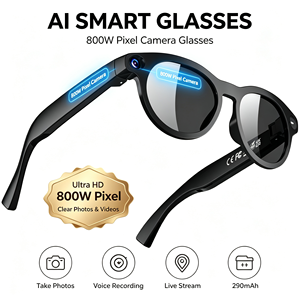
Founded in 2014 in Shenzhen, China, Awia Electronic Commerce Co., Ltd. has established itself as an authoritative manufacturer and exporter of smart wearables, including AI smart glasses, AMOLED smartwatches, and custom NFC rings. Built on the core brand philosophy of acting as an energetic healthy partner, our operations prioritize physical product reliability, rigorous lab testing, and transparent trade practices.
- Verified Manufacturing Authority: Our 2,000+ m² facility is certified under international quality systems and independently assessed on-site by TÜV Rheinland.
- Low MOQ Prototyping & Scale: We support global startups and established brands alike—offering standard model sampling from 1 piece, custom OEM laser branding from 200 pieces, and complete bespoke private mold manufacturing from 1,000 pieces.
- Global Logistics & Dropshipping Ready: Dedicated warehouse inventory in Shenzhen guarantees neutral packaging dropshipping within 3-5 business days for Amazon, TikTok Shop, and Shopify merchants.
- Full International Certification Package: Every shipment includes complete CE, FCC, RoHS test documentation, along with EU Declarations of Conformity and MSDS / UN38.3 freight certificates.