 AWIA
Smart Wearable Factory
AWIA
Smart Wearable Factory
AWIA
Smart Wearable Factory
AWIA
Smart Wearable Factory
Explore our benchmark-certified range of vehicle trackers, personal safety tags, asset tracking devices, and Apple/Google Find My compatible smart locators engineered for global export networks.
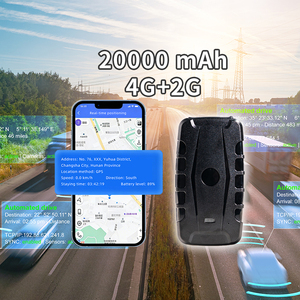 Fleet Telematics
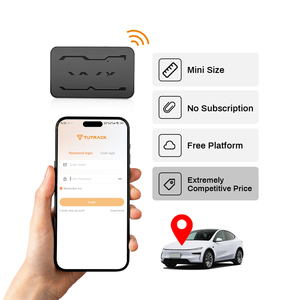 Asset Security
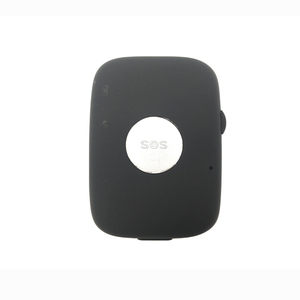 Personal Protection
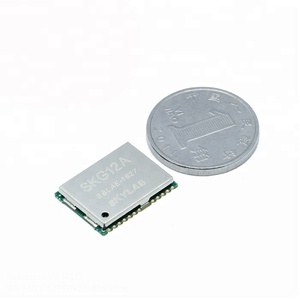 OEM Chipset
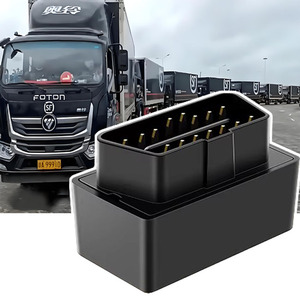 Plug & Play OBD
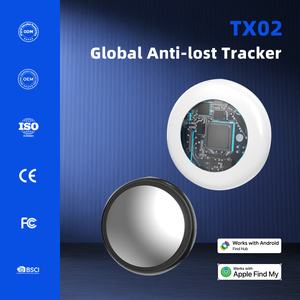 Dual Network Ecosystem
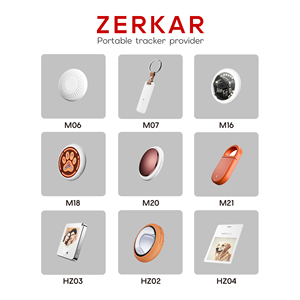 Custom Branding
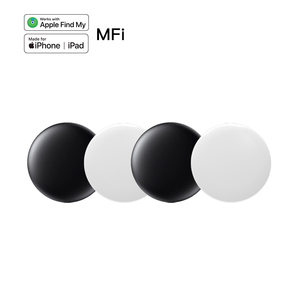 Apple MFi Certified
An authoritative analysis of hardware engineering, multi-constellation RF receiver design, 4G Cat-1 migration, and supply chain strategies for enterprise buyers.
In modern telematics manufacturing, reliance on single-constellation GPS is obsolete. Commercial tracking architectures now integrate multi-constellation GNSS engines supporting GPS (USA), GLONASS (Russia), BeiDou (China), and Galileo (Europe) simultaneously. This multi-system synergy increases visible satellite counts from 6-8 to 24-32 in dense urban canyons, significantly lowering Time-To-First-Fix (TTFF) and maintaining spatial accuracy under 1.5 meters CEP (Circular Error Probable).
Engineered hardware incorporates active ceramic patch antennas coupled with low-noise amplifiers (LNA) and SAW filters. This prevents RF desensitization caused by adjacent 4G LTE band harmonics (specifically Band 13/Band 20 emissions), ensuring stable signal acquisition down to -165dBm tracking sensitivity.
With legacy 2G and 3G networks undergoing global shutdown across North America, Europe, and Asia-Pacific, enterprise procurement teams must mandate LTE Cat-1 (Category 1) or NB-IoT (Narrowband IoT) hardware platforms. 4G LTE Cat-1 bis provides an optimal compromise: it delivers adequate data bandwidth for voice monitoring, real-time OBD diagnostic polling, and FOTA (Firmware Over-The-Air) updates, while eliminating the complex dual-antenna requirement of traditional LTE Cat-4 modules.
For ultra-low power applications, such as cargo container tracking and non-powered asset monitoring, eDRX (Extended Discontinuous Reception) and PSM (Power Saving Mode) within NB-IoT platforms permit device operating lifespans exceeding 5 to 7 years on a single non-rechargeable LiSOCl2 (Lithium Thionyl Chloride) battery pack.
Select the correct architectural baseline according to your operational parameters and market requirements:
| Device Category | Cellular / RF Connectivity | GNSS Chipset / Specs | Power Architecture | Enclosure Rating | Target Deployment |
|---|---|---|---|---|---|
| Heavy Fleet Tracker | 4G LTE Cat-1 + 2G GSM | Multi-GNSS (L1+L5) / -165dBm | 9-90V DC External + Battery | IP65 Flame Retardant | Commercial Logistics, Trucks, Buses |
| Asset Magnetic Locator | 4G Cat-1 bis / NB-IoT | GPS + Beidou / AGPS Support | 10,000mAh Li-ion / Standby 3 Yrs | IP67 Submersible | Container Cargo, Car Rental Security |
| Lone Worker / Personal SOS | 4G VoLTE + BLE 5.0 | Low-Power GNSS + Wi-Fi Positioning | 1,000mAh Magnetic Charging | IP67 Shockproof Rubber | Elderly Care, Lone Workers, Children |
| Automotive OBD Locator | 4G LTE + CAN-Bus RX | High-Sensitivity MTK MT3339 | 12V/24V Vehicle Plug-and-Play | Compact ABS Moulding | UBA Insurance, Fleet Diagnostics |
| Apple/Google Smart Tag | Bluetooth 5.2 LE Mesh | Apple MFi / Google Find Hub | Replaceable CR2032 Coin Cell | IP66 Waterproof Silicone | Luggage, Keys, Pet Collar Tracking |
Strategic intelligence for supply chain directors preparing for next-generation telematics hardware standards.
5G RedCap is poised to replace LTE Cat-4 and Cat-1 in mid-tier IoT applications. By trimming channel bandwidth to 20MHz and removing complex MIMO configurations, 5G RedCap reduces hardware bill-of-materials (BOM) costs by 50-65% compared to standard 5G NR, while delivering native integration into 5G core networks with low-latency slicing.
Next-generation trackers integrate 6-axis MEMS IMU sensors with low-power microcontrollers running micro-ML models. Rather than streaming raw sensor data to cloud servers (which drains battery and consumes network bandwidth), devices detect dangerous driving events, impact collisions, fall detection, and rollover angles directly at the hardware edge.
3GPP Release 17 satellite NTN connectivity is reshaping global asset tracking. Devices equipped with NTN-compatible NB-IoT modems can seamlessly switch between ground base stations and low-earth orbit (LEO) satellites, providing 100% true global coverage across oceans, deserts, and remote mining zones.
High-efficiency perovskite solar cells integrated into heavy-duty asset tracker housings now generate up to 100mW per square inch under partial daylight. Combined with ultra-low power GNSS chips, solar-assisted hardware eliminates battery replacement maintenance cycles for long-haul intermodal transport.
Physical SIM cards are being phased out in favor of soldered MFF2 (eSIM) chips. Embedded GSMA-compliant eUICC technology allows fleet buyers to remotely switch cellular profile carriers over-the-air (OTA), mitigating roaming costs and securing zero-touch provisioning across multinational borders.
Consumer and light commercial tags are transitioning from proprietary standalone apps to cross-platform BLE mesh ecosystems. Dual-certified chips leverage hundreds of millions of active iOS and Android smartphones as passive locators, achieving sub-meter pinpointing without cellular subscription fees.
Inside Awia Electronic Commerce Co., Ltd.'s Shenzhen Production Center: Quality Control, Tooling, and Firmware Tailoring.
As an industry-leading Shenzhen-based telematics manufacturer established in 2014, Awia Electronic Commerce Co., Ltd. operates state-of-the-art production environments dedicated to electronic assembly, RF tuning, and structural IP-grade waterproofing test automation.
Our high-speed Yamaha and Panasonic SMT assembly lines maintain 0201 component placement accuracy. 100% of PCBs undergo Automated Optical Inspection (AOI) and X-ray inspection for BGA chip package solder joints.
Every GPS tracking module undergoes RF tuning in our internal wireless anechoic chamber to verify TRP (Total Radiated Power) and TIS (Total Isotropic Sensitivity) performance across global 4G bands.
Hardware designs undergo rigorous environmental testing including thermal shock (-40°C to +85°C), salt spray corrosion, vibration testing, and IP67 water immersion verification before batch release.
Our in-house software development team provides custom protocol adaptation (JT/T808, GT06, MQTT, HTTP, UDP/TCP), branded mobile application re-skinning, and OTA server setup for wholesale customers.
Clear answers to procurement, protocol integration, custom tooling, and order logistics questions.
Connect directly with our engineering sales team to request sample evaluation kits, detailed BOM cost analysis, platform API documentation, or private-mould manufacturing consultations.