China has become a major sourcing destination for connected eyewear accessories. Its manufacturing network covers molded plastics, lithium-battery systems, magnets, charging contacts, and compact electronics.
This guide examines China’s top ten Smart Glasses Charging Case suppliers through practical purchasing criteria. We consider charging stability, battery protection, hinge durability, heat control, materials, customization, testing, and production capacity. We also review communication quality, sample performance, minimum order quantities, and export experience. Small details matter. A loose magnetic contact can interrupt charging overnight. A weak hinge can fail inside a commuter’s bag.
Wearable technology analyst Anshel Sag has observed, “The best wearable technology is the technology people can use naturally every day.” That principle also applies to a charging case. It should protect the glasses, recharge them reliably, and remain simple during travel. Supplier claims still require verification. Product pages can look impressive, while samples reveal uneven alignment or slow charging.
The following overview is designed for importers, brand owners, distributors, and technology buyers. It does not treat supplier rankings as permanent. Capabilities change with tooling, component availability, certification updates, and quality-control teams. Some suppliers may offer stronger engineering support, while others may compete through pricing or flexible customization. That trade-off deserves careful review.
Readers should request samples, battery documentation, inspection records, and clear warranty terms before placing substantial orders. A thoughtful comparison can reduce avoidable failures. It cannot remove every risk. Even a polished Smart Glasses Charging Case may need design revisions after real-world testing.
What Are Smart Glasses Charging Cases and Why Do They Matter?
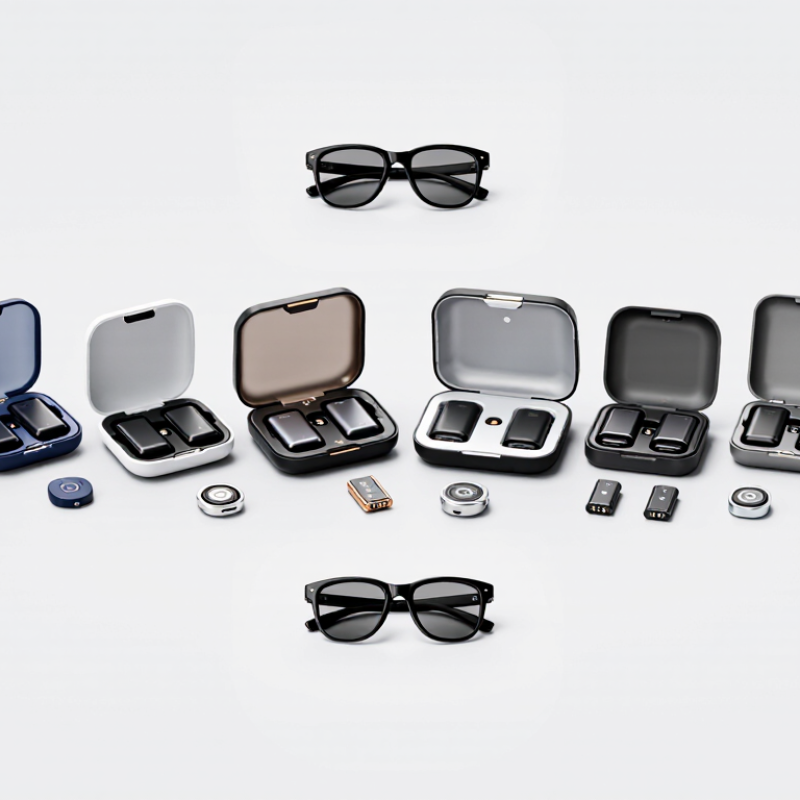
A smart glasses charging case stores, protects, and recharges wearable eyewear between uses. It combines a rechargeable battery, charging contacts, alignment guides, and protective housing. The case should fit a pocket, yet provide enough power for daily commuting, meetings, and travel. Small details matter. Loose pogo pins can interrupt charging. Weak hinges can fail after repeated opening.
This category is becoming more important as wearable adoption expands. Grand View Research estimates the global smart glasses market could grow at a 27.9% compound annual growth rate from 2024 to 2030. Mordor Intelligence also forecasts strong double-digit growth for smart eyewear during this period. These figures differ because researchers define smart glasses differently. Still, the direction is clear. More devices create greater demand for dependable charging accessories.
For buyers comparing the top ten charging case suppliers, engineering evidence matters more than glossy product images. Check battery capacity, cycle-life testing, thermal protection, charging efficiency, and contact durability. Ask for test records and production samples. A good case should prevent overcharging and protect lenses from scratches. It should also maintain stable charging after hundreds of open-and-close cycles. Suppliers with documented quality systems and traceable materials are easier to audit. Yet specifications can mislead. A larger battery may add uncomfortable weight. I have seen compact cases feel premium, but their internal alignment was poor. That flaw deserves closer testing.
How to Evaluate Smart Glasses Charging Case Suppliers
Choosing among China’s top smart glasses charging case suppliers requires more than comparing prices. Evaluate the supplier’s engineering process, production records, and quality controls. Ask for material specifications, battery protection details, and test reports for overheating, overcharging, and short circuits. A reliable supplier should explain these results clearly.
Request several samples from different production batches. Check whether the glasses fit without pressure, whether charging pins align smoothly, and whether the hinge survives repeated opening. Measure charging time with the intended glasses, not only with laboratory equipment. Test the case after drops, cable changes, and temperature variation. Small details matter. A loose magnet can damage the user experience.
Audit the factory when possible. Review incoming material checks, assembly records, worker training, and final inspection procedures. Confirm traceability for batteries, connectors, and plastics. Discuss minimum order quantities, tooling ownership, replacement policies, and realistic delivery schedules. Written answers are stronger than verbal promises. A polished sample can still mislead. Production consistency is harder to prove. One weakness is easy to overlook: suppliers may report excellent test results but provide limited raw data. Request dated records and independent verification when the order is important. Also examine communication speed during a technical problem, because support after delivery often reveals more than a sales presentation.
China’s Top 10 Smart Glasses Charging Case Suppliers
China’s Top 10 Smart Glasses Charging Case Suppliers are gaining attention as wearable devices become smaller, lighter, and more power-conscious. Counterpoint Research reported that global smart glasses shipments grew strongly in 2024, supported by camera, audio, and artificial intelligence features. This growth increases demand for compact charging cases with reliable connectors and safer battery control.
The leading Chinese supplier group includes electronics manufacturers, precision molders, battery-pack specialists, and original design manufacturers. Many operate around Shenzhen, Dongguan, and Suzhou. Their cases commonly use USB-C input, magnetic pogo pins, molded ABS, aluminum inserts, and lithium-polymer cells. A practical buyer should inspect cell certification, charging temperature, hinge-cycle testing, and drop resistance. Appearance is not enough.
Small details matter. A 0.2-millimeter alignment error can interrupt charging. A weak hinge may loosen after repeated daily use. Grand View Research estimates that the global smart glasses market will expand rapidly through 2030, creating pressure for higher-volume production and shorter development cycles. However, market forecasts often combine different wearable categories. That makes direct charging-case estimates less certain.
Supplier audits should include factory records, sample traceability, and independent safety testing. TÜV Rheinland and UL-related testing frameworks are useful references, but requirements vary by destination market. I would also request five hundred opening-and-closing cycles before approval. It is not a perfect test. Real users may be rougher. Cost comparisons should include tooling, firmware support, packaging, replacement rates, and delivery delays, not only the quoted unit price.
China Top 10 Smart Glasses Charging Case Suppliers
| Rank |
Supplier ID |
Main Manufacturing Region |
Charging Case Type |
Typical Input |
Battery Capacity Range |
Customization Capability |
Typical MOQ |
Sample Lead Time |
Mass-Production Lead Time |
| 1 |
Supplier 01 |
Shenzhen, Guangdong |
Protective storage and charging case |
USB-C, 5V DC |
500–1,000 mAh |
High: mold, logo, color, inserts and firmware options |
500–1,000 units |
7–12 days |
25–35 days |
| 2 |
Supplier 02 |
Dongguan, Guangdong |
Hard-shell charging case with molded tray |
USB-C, 5V DC |
400–800 mAh |
High: ABS, PC, silicone and EVA construction |
1,000 units |
8–14 days |
30–40 days |
| 3 |
Supplier 03 |
Huizhou, Guangdong |
Power-bank style charging case |
USB-C, 5V/1A |
800–1,500 mAh |
Medium to high: battery, display and connector options |
1,000–2,000 units |
10–15 days |
30–45 days |
| 4 |
Supplier 04 |
Guangzhou, Guangdong |
Travel charging case with cable storage |
USB-C, 5V DC |
300–700 mAh |
Medium: fabric, color, printing and internal layout |
500 units |
7–10 days |
20–30 days |
| 5 |
Supplier 05 |
Ningbo, Zhejiang |
Compact injection-molded case |
USB-C, 5V DC |
350–900 mAh |
High: enclosure tooling and surface finishing |
1,000 units |
10–16 days |
30–45 days |
| 6 |
Supplier 06 |
Xiamen, Fujian |
EVA protective charging case |
USB-C, 5V DC |
300–600 mAh |
Medium: fabric, zipper, foam insert and logo |
500–1,000 units |
8–12 days |
25–35 days |
| 7 |
Supplier 07 |
Suzhou, Jiangsu |
Premium aluminum charging case |
USB-C, 5V/1A |
500–1,000 mAh |
High: anodizing, CNC details and custom inserts |
1,000–2,000 units |
12–18 days |
35–50 days |
| 8 |
Supplier 08 |
Foshan, Guangdong |
Wireless charging case |
USB-C and Qi-compatible input |
500–1,200 mAh |
Medium to high: coil placement and enclosure design |
1,000 units |
12–20 days |
35–50 days |
| 9 |
Supplier 09 |
Wenzhou, Zhejiang |
Leatherette and fabric charging case |
USB-C, 5V DC |
300–800 mAh |
Medium: material, stitching, embossing and packaging |
500 units |
8–14 days |
25–40 days |
| 10 |
Supplier 10 |
Shanghai |
Multi-device charging and storage case |
USB-C, 5V/2A |
800–2,000 mAh |
High: modular inserts, battery system and packaging |
1,000–2,000 units |
14–21 days |
40–60 days |
Data fields represent common OEM/ODM procurement specifications and typical production ranges for smart glasses charging cases in China. Final specifications, certification requirements, pricing, MOQ and lead times should be confirmed directly with each supplier.
Key Products, Technologies, and Manufacturing Capabilities
China Top 10 Smart Glasses Charging Case Suppliers
China’s leading charging case suppliers focus on compact protection, stable charging, and efficient production. Their key products include portable cases, desk charging docks, replacement battery modules, and custom travel packages. A well-designed case should fit the glasses without pressure. Soft interior ribs prevent lens scratches, while magnetic alignment keeps charging contacts steady.
Core technologies include USB-C power delivery, pogo-pin charging, battery management systems, and low-power indicator controls. Some factories add wireless charging coils, temperature sensors, and overcurrent protection. Engineers usually test hinge cycles, cable insertion, drop resistance, and charging temperature. Small details matter. A loose hinge can damage the case after months of daily use.
Manufacturing capability separates experienced suppliers from simple assemblers. Strong factories combine industrial design, 3D printing, injection molding, CNC tooling, SMT assembly, and final quality inspection. They can adjust plastic hardness, surface texture, magnet strength, and internal tolerances. Supplier audits should examine mold maintenance, battery traceability, aging tests, and sample records. Production speed is useful, but consistency matters more. Not every supplier offers equal engineering depth. Some prototypes look excellent, yet their mass production reveals uneven seams or unstable charging. Buyers should request pilot runs, inspection reports, and repeated samples before approving large orders. Mistakes still happen, especially when the glasses design changes late.
How to Select the Right Supplier for Your Business needs
China Top 10 Smart Glasses Charging Case Suppliers?
How to Select the Right Supplier for Your Business Needs
A top-ten list is only a starting point. Your best supplier must fit your product, market, and expected order volume. Ask for case samples before discussing large quantities. Check the hinge, charging pins, magnets, cable port, and surface finish by hand. Small alignment errors can prevent smart glasses from charging correctly.
Request clear battery specifications, including capacity, cycle performance, protection design, and charging temperature limits. A reliable supplier should provide recent quality records and testing documents for the battery and charging system. Ask how workers inspect each unit. Photos of the production line help, but a live factory audit gives stronger evidence. Confirm whether the factory or a trading company manages production.
Use a written sample approval process. Test cases with different glasses, cables, and adapters. Leave them charging overnight under controlled conditions. Measure heat, charging stability, and hinge wear after repeated use. Do not select only by price. A low quote may exclude mold fees, packaging, testing, or replacement support.
Discuss minimum order quantities, lead times, spare units, warranty handling, and design changes in writing. Ask for a pilot order before full production. It may feel slower, but it exposes weak communication early. I would also question perfect claims. Real suppliers should explain limitations, delays, and possible defects honestly. Your decision should rely on verified samples, documented controls, and responsive communication.
Conclusion
This article provides a practical overview of the Smart Glasses Charging Case industry in China, explaining how these cases protect, store, and recharge smart eyewear while improving portability and daily usability. It examines essential features such as battery capacity, charging efficiency, protective materials, compact design, compatibility, thermal safety, and support for customized product development. Readers will also learn how to evaluate suppliers through manufacturing experience, quality-control systems, certification capabilities, production capacity, delivery reliability, communication, and after-sales service.
The article introduces China’s top 10 Smart Glasses Charging Case suppliers based on their product strengths, engineering resources, technologies, and manufacturing capabilities, without focusing only on price. It also compares key production considerations, including mold development, electronic integration, surface finishing, testing, packaging, and scalable production. Finally, it offers a clear framework for selecting the right supplier according to business goals, target markets, order volume, customization requirements, budget, timelines, and long-term cooperation potential.