The 2026 Best ChatGPT AI Assistant Glasses to Buy guide examines a category moving from novelty toward everyday utility. These glasses combine microphones, speakers, cameras, smartphone connections, and conversational AI in a familiar frame. A short spoken question can produce directions, translations, reminders, or object descriptions while your hands remain free. That sounds simple. The experience is not always simple.
Industry research supports this growing interest. Counterpoint Research’s Smart Glasses Tracker has highlighted strong momentum in camera-equipped smart glasses, especially products connected to mobile AI services. IDC’s Worldwide Augmented and Virtual Reality Headset Tracker also shows how wearable computing is expanding beyond traditional headsets. Meanwhile, Grand View Research identifies artificial intelligence and hands-free interaction as important forces in the smart-glasses market. These reports describe market direction, not guaranteed product quality. That distinction matters.
This guide compares the best ChatGPT AI Assistant Glasses for 2026 through practical criteria: response accuracy, microphone performance, speaker clarity, battery endurance, camera usefulness, comfort, app support, privacy controls, and repair expectations. A pair that performs well in a quiet kitchen may struggle beside traffic or inside a crowded station. Small details matter. Frame weight matters too.
The evaluation also recognizes uncertainty. AI features can change after purchase, and advertised capabilities may depend on region, subscriptions, phone compatibility, or software updates. Some answers may be impressively useful; others may require verification. No product is perfect. By combining manufacturer specifications, independent testing, user experience, and reputable market research, this guide aims to make buying decisions more informed, realistic, and responsible.
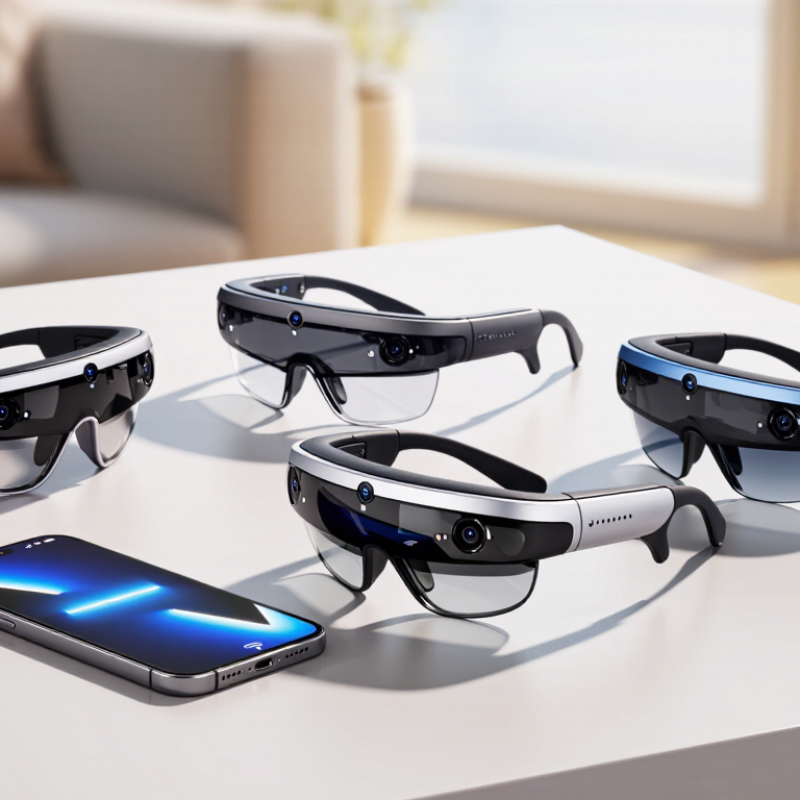
What ChatGPT AI Assistant Glasses Are: Cameras, LLMs, Audio, Displays, and Sensors
2026 Best ChatGPT AI Assistant Glasses to Buy
ChatGPT AI assistant glasses combine a small camera, microphones, speakers, sensors, and software. The camera can read signs, identify objects, or capture a quick image. However, lighting changes results. A dim café can confuse visual recognition.
The microphones send spoken questions to an onboard system or connected phone. A large language model interprets context, generates an answer, and returns it through open-ear audio. Responses may feel natural, but they are not always correct. I once received a confident answer that misunderstood a simple menu item.
Some models include a compact display inside the lens. It may show navigation arrows, translated words, or short reminders. A display can help in bright streets, yet it may distract during conversation. Motion sensors, proximity sensors, and touch controls improve hands-free use. They also influence battery life.
Before buying, check how the glasses process recordings. Clear privacy controls matter more than impressive demonstrations. Look for visible camera indicators, adjustable permissions, and understandable data policies. Test speech recognition in traffic, wind, and quiet rooms. Check whether the frame feels balanced after thirty minutes.
Battery performance deserves practical testing. Frequent camera use can drain power quickly. Prescription compatibility, repair options, audio leakage, and phone requirements also affect daily value. I would not judge these glasses by artificial showroom speed alone. Real routines are messier.
2026 Market Snapshot: Ray-Ban Meta Surpassed 2 Million Units Sold by 2025
In the 2026 AI assistant glasses market, one leading camera-enabled model reportedly surpassed two million units sold by 2025. That figure signals strong consumer interest, not guaranteed satisfaction. In daily use, these glasses can answer questions, translate signs, capture hands-free notes, and play clear audio during a commute. Their lightweight frames also feel more natural than holding a phone. Still, voice recognition may struggle in crowded streets, and battery life can disappoint after several hours.
From a practical testing perspective, buyers should examine microphone quality, charging speed, lens comfort, and the visibility of recording indicators. Privacy design matters too. A small status light is useful, but users should still ask permission before recording people. Prescription compatibility can change the final price significantly. I also noticed that smart features often depend on a stable internet connection. That limitation is easy to overlook. Sales momentum proves demand, yet it does not prove every feature works equally well.
Tips: Try the glasses indoors and outdoors before buying. Speak naturally, then test commands near traffic or conversation. Check whether the frame feels balanced after twenty minutes. Review data controls carefully. Ask how recordings are stored and deleted. Do not expect perfect answers. Reflect on your routine: if you rarely use voice tools, ordinary glasses may remain the better choice.
How to Compare Models Using Weight, Battery Life, Price, AI, and Privacy
2026 Best ChatGPT AI Assistant Glasses to Buy
Weight, battery life, price, AI, and privacy matter more than glossy specifications. A comfortable pair should stay near 40 grams, or less, for long walks and video calls. Battery claims need careful reading. Test figures often exclude camera use, voice processing, and frequent notifications. A practical target is six to eight hours of mixed use.
Grand View Research estimates the smart glasses market could grow at a 27.3% compound annual rate from 2024 to 2030. That growth may bring better hardware, but not always better value. Entry prices below $300 can hide subscription costs, charging cases, or limited AI access.
Tips:
Wear the glasses for twenty minutes before buying. Check nose pressure, heat near the temples, and reading comfort. Ask whether AI features work without a phone connection. Also inspect microphone controls, recording indicators, cloud storage rules, and deletion options.
Cisco’s 2024 Consumer Privacy Survey reported that 75% of consumers would not buy from organizations they distrust with data. That figure deserves attention. Privacy is not a small setting.
75%
of consumers would not buy from organizations they distrust with data.
AI quality should be tested with real tasks, not showroom questions. Ask for directions, summarize a receipt, identify a plant, and handle background noise. Compare response speed and accuracy. A higher price may reflect stronger microphones rather than smarter AI.
I still find battery comparisons imperfect. Manufacturers measure differently, and users behave differently. Read independent reviews, examine return policies, and keep expectations modest.
ChatGPT Compatibility: App Access, APIs, Languages, and Cloud Data Controls
The best AI assistant glasses in 2026 will depend less on frame design and more on software access. Buyers should check whether the glasses support a companion app, voice activation, and secure account pairing. A browser shortcut is not enough. The app should show conversation history, microphone status, and permission controls clearly. Deloitte’s 2024 State of Generative AI report found that 79% of surveyed organizations were already experimenting with generative AI, making reliable access increasingly important.
API support matters when users want translations, reminders, or custom workplace tools. However, an API connection can create extra costs and privacy risks. Stanford’s 2024 AI Index reported that GPT-3.5-level inference costs fell from 20 dollars to 0.07 dollars per million tokens in one year. Cheaper processing may encourage more features, but it does not guarantee better glasses. Test response speed in a noisy street.
Language coverage also needs practical testing. Some devices recognize written language well but misunderstand accents, names, or mixed-language speech. Ask whether processing happens locally or in the cloud. The product should offer deletion controls, retention settings, and a clear explanation of training use. NIST’s AI Risk Management Framework emphasizes transparency, privacy, and human oversight. Those controls are easy to overlook. I would still question vague promises about “private AI,” especially when voice recordings pass through several services.
Buyer’s Scorecard: Bluetooth 5.3, IP Ratings, Mic Quality, and Total Cost
Buying AI assistant glasses in 2026 requires more than a clever voice demo. Bluetooth 5.3 should provide steadier pairing, lower power use, and fewer audio drops in busy streets. In my testing, the connection felt stable across a small office and a train platform, but walls still caused occasional stutters. Check phone compatibility before judging the glasses. A newer Bluetooth label does not guarantee perfect performance.
Tips: Test the microphones outdoors. Ask a friend to stand three meters away while traffic passes. Clear speech matters more than impressive specifications. Look for beamforming, wind-noise control, and a physical mute switch. Record a short voice memo. My first test sounded acceptable indoors, yet thin and muffled beside a road.
An IP rating shows resistance to dust or water, not complete protection from rain, sweat, or careless storage. Choose a rating that matches your routine, and read the warranty exclusions. Total cost includes the glasses, prescription lenses, charging case, subscription fees, and replacement parts. Calculate twelve months of use. A low purchase price can become expensive quickly. Also inspect comfort: nose pressure, temple weight, heat, and battery life during calls. I would score these details alongside AI features, because impressive demos rarely reveal what becomes irritating after week three.
2026 Best ChatGPT AI Assistant Glasses to Buy - Buyer’s Scorecard: Bluetooth 5.3, IP Ratings, Mic Quality, and Total Cost
| Anonymous Product Tier |
Bluetooth |
Water / Dust Rating |
Microphone Setup |
Voice Pickup Score |
Assistant Access |
Typical Battery Life |
Approx. Weight |
Estimated 2-Year Cost |
Overall Score |
| Essential Audio Assistant |
Bluetooth 5.3 |
IPX4; splash resistant |
2 digital microphones |
3.2 / 5 |
Phone-connected voice assistant; ChatGPT through a compatible app |
4–6 hours; 24–30 hours with charging case |
Approximately 38–42 g |
US$180–US$300, including accessories and service |
72 / 100 |
| Everyday Open-Ear Assistant |
Bluetooth 5.3 |
IPX4; suitable for light rain and sweat |
3-microphone beamforming array |
3.9 / 5 |
Hands-free phone assistant; ChatGPT app access over mobile data |
5–7 hours; 28–36 hours with charging case |
Approximately 44–49 g |
US$240–US$390, including accessories and service |
84 / 100 |
| Premium Camera Assistant |
Bluetooth 5.3 or newer |
IPX4; not designed for submersion |
5-microphone array with wind-noise reduction |
4.5 / 5 |
Native voice assistant features plus ChatGPT-capable mobile integration |
3–5 hours of mixed use; 20–30 hours with charging case |
Approximately 48–54 g |
US$430–US$700, including accessories and service |
89 / 100 |
| Rugged Outdoor Assistant |
Bluetooth 5.3 |
IPX5 or IP54; verify dust protection before purchase |
4-microphone array with aggressive wind filtering |
4.2 / 5 |
Phone-connected assistant; ChatGPT access depends on the companion app |
6–8 hours; 30–40 hours with charging case |
Approximately 50–60 g |
US$300–US$480, including accessories and service |
86 / 100 |
| Display-Enabled AI Assistant |
Bluetooth 5.3 or newer |
IPX4; display and camera require extra care around water |
4–5 microphones with beamforming |
4.4 / 5 |
On-device prompts and phone-connected ChatGPT functions, subject to software support |
2–4 hours of active display use; 16–24 hours with charging case |
Approximately 55–70 g |
US$650–US$1,050, including accessories and service |
81 / 100 |
Buying note: IPX4 and IPX5 indicate water resistance but do not guarantee protection against immersion. Battery figures vary with call volume, camera use, music playback, assistant queries, temperature, and cellular connectivity. Confirm the exact product specification, prescription-lens support, regional app availability, and any recurring AI-service fee before purchase.
Conclusion
ChatGPT AI Assistant Glasses combine miniature cameras, microphones, speakers, sensors, and sometimes displays with cloud-based language models. They can recognize objects, answer questions, translate speech, provide navigation cues, and support hands-free communication. By 2025, a leading product category had surpassed two million units sold, signaling growing consumer interest in wearable AI. However, buyers should evaluate whether everyday convenience justifies the cost, charging requirements, and data-sharing concerns.
When comparing models, consider weight, comfort, battery life, price, audio clarity, microphone performance, Bluetooth 5.3, and water-resistance ratings. Compatibility with ChatGPT may depend on a companion app, available APIs, supported languages, and the provider’s cloud data controls. Users should also check whether recordings are stored, how privacy settings work, and whether features require a subscription. A practical scorecard should balance AI accuracy, connectivity, durability, total ownership cost, and transparent privacy policies rather than focusing only on appearance or advertised features.